

NIH Grant Fuels Cutting-Edge Genome Editing
Genetic disorders like sickle cell anemia affect millions worldwide, and new approaches to treatment are urgently needed. In Major NIH Grant is Strengthening Rutgers–Camden Research, author Eileen Reinhard details how chemistry professor and Center for Computational and Integrative Biology (CCIB) member Jinglin Fu is leading work that could change the landscape of genetic medicine. Supported by nearly $500,000 from the National Institutes of Health (NIH), Fu’s team is creating nucleic acid nanoparticles to deliver CRISPR/Cas9 into blood stem cells — a crucial step in advancing genome editing. Graduate students in the Chemistry and Molecular Technology M.S. program and the Computational and Integrative Biology M.S. and Ph.D. programs will have the opportunity to contribute directly to this work.
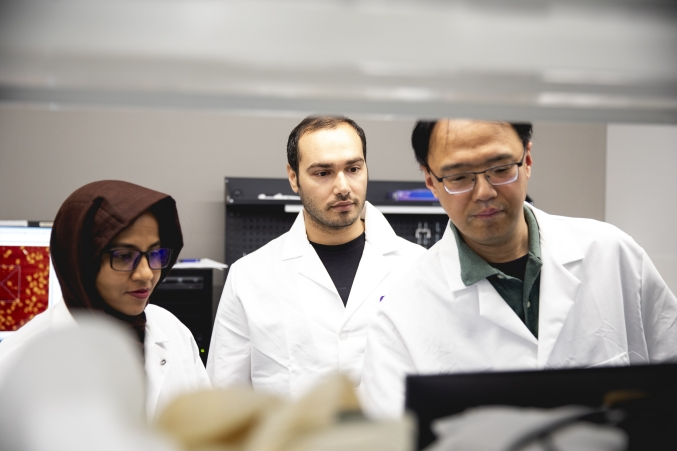
The Bio-Mimetic Design and Nanoscience Lab, based in the Joint Health Sciences Center, is where chemistry and computational biology come together in practice. Students working with Fu are developing complex macromolecular systems to improve targeted delivery and understand biochemical networks — research that could unlock new therapies for inherited blood disorders. This interdisciplinary model, a hallmark of CCIB, shows how Rutgers–Camden research crosses traditional boundaries to pursue solutions with real impact.
Read Eileen Reinhard’s full article to see how these projects connect Chemistry, Molecular Technology, and CCIB, while opening doors for graduate students and advancing discoveries that may one day transform treatment for genetic disease.
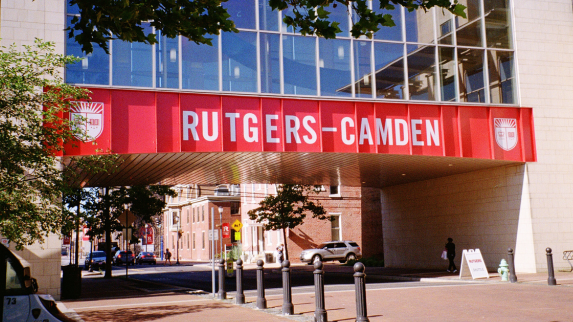
Charting New Frontiers in Chemistry and Molecular Technology
The Master of Science in Chemistry & Molecular Technology at Rutgers University–Camden emphasizes hands-on laboratory experience and modern chemical research. Students engage with state-of-the-art instrumentation, developing skills in communication, critical thinking, and problem-solving essential for careers in chemistry. The program offers two tracks: the Experimental Track, which includes a thesis component for those aiming to advance in scientific professions, and the Professional Track, a non-thesis option suitable for mid-career professionals or individuals seeking part-time study. Graduates are well-prepared for roles in the chemical and pharmaceutical industries, teaching positions, or further studies in Ph.D. programs across various scientific disciplines.
Bridging Disciplines: The Center for Computational and Integrative Biology
The Center for Computational and Integrative Biology (CCIB) at Rutgers–Camden combines experimental and computational methods to address complex biological questions. CCIB offers graduate programs leading to M.S. and Ph.D. degrees, emphasizing a holistic understanding of biological systems from molecular to population levels. The curriculum equips students like Basirat with the skills to conduct innovative research at the intersection of biology, chemistry, computer science, mathematics, and physics.
Spotlights & Stories
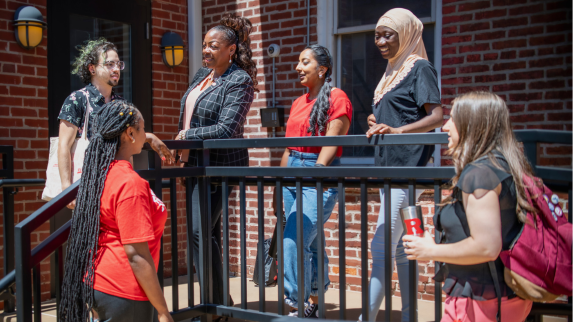
Want more stories like this? Spotlights and Stories highlights alumni, faculty, staff, and student experiences through stories, video, and voice. Learn more
Explore Graduate School Programs
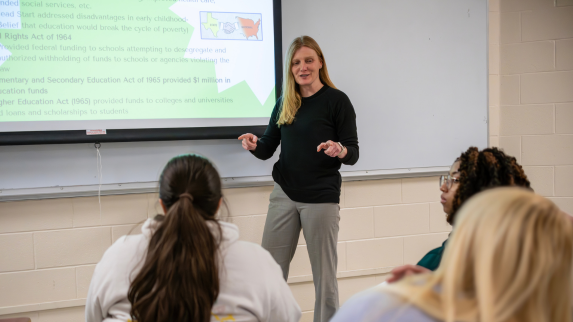
Rutgers Graduate School-Camden offers 20+ graduate certificates, master’s, and doctoral programs across various disciplines, including biology, data science, creative writing, and psychology. We take pride in our academic diversity. Learn more
Former Students, Get Involved
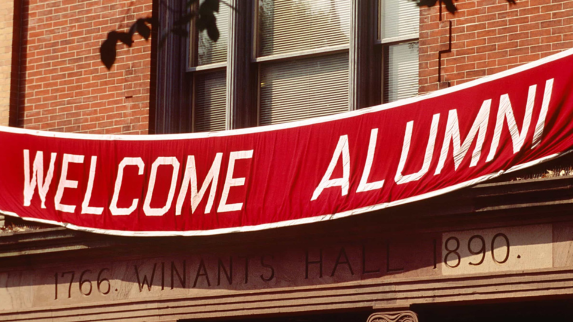
Stay connected with Rutgers-Camden! Engage with former students, attend events, and support current students. Your involvement strengthens our community and helps shape future success. Learn more