

Innocence, Insight, & the Politics of Childhood
What happens when children watch politics unfold on television? And what does it mean when adults watch children react to it? This project examines how childhood and politics intersect in the British reality television program Gogglesprogs (2016–2019), where cameras capture children reacting to current events, media, and political issues in their own homes. By analyzing both the program and public responses to it, the study explores how children are framed as political subjects, media consumers, and symbols of the democratic future.
The research was presented at the Graduate Poster Exhibition during the 2025 SPARK! (Showcase of Projects, Art, Research, and Knowledge). Developed within the Ph.D. program in Childhood Studies at Rutgers University–Camden, the project was completed by Katie Fredricks. The abstract below introduces her analysis of mediated childhood, politics, and public reception.
Abstract: Building Solidarity to Break Cycles of Repression
In the current historical moment, political and popular discourses invoke “children” and “childhood” for multitudes of competing ends. While perspectives of childhood have shifted throughout history, in contemporary media children are both praised as the revolutionary future, inflated with expectations that they will make up for centuries of others’ carelessness, and denigrated for their innocence with comparisons to leadership adults perceive as incompetent or petulant. Although inconsistent, discourses of childhood are inseparable from discourses of politics (James and Prout 1990).
In this paper, I examine the intertwining discourses of childhood and politicized issues as presented in the British reality television program Gogglesprogs (2016–2019). The project also considers paratextual material in the form of critical and popular responses to the program. The analysis interrogates these mediated representations of children, specifically those related to their capacities as consumers of media related to highly politicized issues such as gender, climate justice, and democratic elections in both the United Kingdom and the United States.
Held up across critical reviews and casual tweets as genuine, witty, inspirational, and even restoring some viewers’ “faith in humanity,” the child stars of public broadcast Channel 4’s Gogglesprogs captured the public’s attention across two seasons and several holiday specials. Week after week, audiences tuned in to watch edited and packaged footage of British children in their homes watching and reacting to television. My analysis employs data from the program, as well as its critical and popular reception, as sites for inquiry into contemporary representations and conceptualizations of young viewers and their relation to the social world as seen on television.
Based on a critical content analysis of all sixteen episodes, as well as a sampling of news articles, blog posts, and social media exchanges, this examination illuminates the complex ways in which children’s media consumption, long treated as a social problem, may actually provide a rare avenue through which children actively negotiate politicized messages. The paper explores how children watching television function as active audiences and meaning-makers. Through paratextual analysis, it also examines how the meanings children construct while watching television, when subsequently televised themselves, may shape public perspectives on children and childhood more broadly.
Ultimately, Gogglesprogs reinscribes contradictory representations of the child as a political consumer. In terms of everyday viewing practices and in relation to large-scale social and political forces, the program challenges notions of children as passive objects. The wider reception of the program, however, reinforces classic conceptualizations of the child as authentic, “wise beyond their years,” and a force for good in ways that are both flattering and limiting. In an era when media representations are frequently questioned, the expected purity and honesty of the child, even when interwoven with mediated politics, preserves television consumers’ faith in the future of democracy.
Graduate Poster Exhibition at SPARK!
The Graduate Poster Exhibition celebrates the research and creative work of the graduate community, showcasing everything from prose and code to original research and artistic expression. As part of SPARK! (Showcase of Projects, Art, Research, and Knowledge), a reimagining of Research Week, the exhibition highlights the depth, range, and impact of graduate scholarship and invites the campus community to engage with ideas taking shape across disciplines.
Interdisciplinary Insights: Rutgers-Camden’s Childhood Studies Programs
Rutgers University–Camden offers interdisciplinary M.A. and Ph.D. programs in Childhood Studies, focusing on the multifaceted experiences of children across various contexts. The M.A. program equips students with the skills to conduct research, influence social policy, and work with diverse child populations, leading to careers in public policy, social services, and education. The Ph.D. program immerses students in comprehensive theoretical and methodological training, preparing them for scholarly research and roles in academia, policy-making, and organizations dedicated to children’s welfare.
Crafting Stories, Analyzing Media: Explore the MA in English and Media Studies
Dive into the dynamic world of the Master of Arts in English and Media Studies at Rutgers University–Camden, where literature, culture, and digital media converge. This interdisciplinary program equips students with the skills to critically analyze texts, media, and cultural narratives while fostering creativity and research expertise. With courses spanning literary traditions, media analysis, and a unique focus on diversity, including topics like race and gender, the program prepares graduates for impactful careers in academia, publishing, and beyond. Plus, the vibrant Rutgers–Camden Writers House offers an inspiring space for creative growth through workshops, readings, and events, making this program a hub for innovative thinkers and storytellers.
Spotlights & Stories
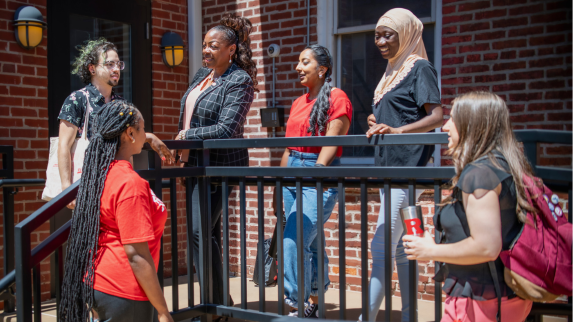
Want more stories like this? Spotlights and Stories highlights alumni, faculty, staff, and student experiences through stories, video, and voice. Learn more
Explore Graduate School Programs
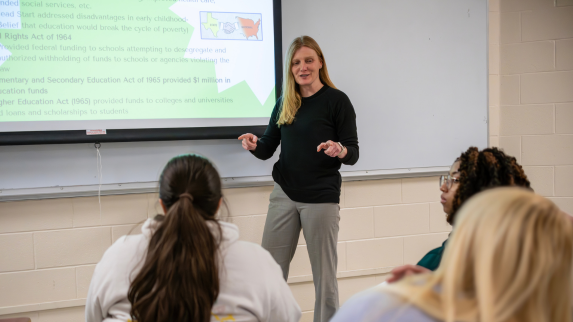
Rutgers Graduate School-Camden offers 20+ graduate certificates, master’s, and doctoral programs across various disciplines, including biology, data science, creative writing, and psychology. We take pride in our academic diversity. Learn more
Former Students, Get Involved
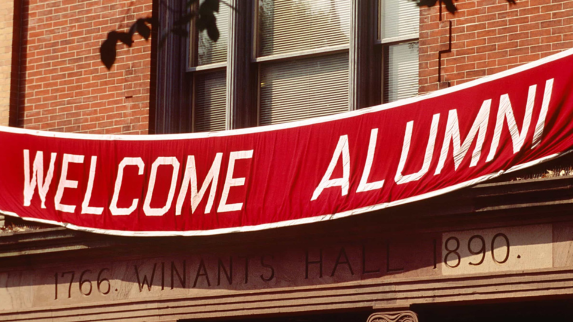
Stay connected with Rutgers-Camden! Engage with former students, attend events, and support current students. Your involvement strengthens our community and helps shape future success. Learn more