

Tracking How Bacteria Build & Move Sphingolipids
Sphingolipids are well known components of eukaryotic cells, playing important roles in organisms ranging from fungi and plants to animals. In bacteria, however, these lipids appear in only a small number of species, and their biological functions and synthesis pathways remain less understood. This project investigates how bacteria produce and transport sphingolipids, focusing on the model organism Caulobacter crescentus.
The research was presented at the Graduate Poster Exhibition during the 2025 SPARK! (Showcase of Projects, Art, Research, and Knowledge). Developed within the Master of Science program in Computational and Integrative Biology, the project was completed by Anupam Dalmia. The study explores how sphingolipids are synthesized and transported within bacterial cells, helping clarify mechanisms that influence bacterial physiology and host–microbe interactions.
Abstract: Sphingolipid Synthesis and Its Trafficking in Caulobacter crescentus
Sphingolipid-derived ceramides are found ubiquitously in eukaryotes from fungi to plants to animals. By contrast, these lipids have been reported in only a small number of bacterial taxa. Despite the limited number of sphingolipid (SL)-producing bacteria, there is great variation in acyl chain length and degree of saturation, acyl chain hydroxylation, and lipid headgroups.
This structural diversity is paralleled by a wide range of physiological roles for SLs, including modulation of host–microbe interactions, protection from bacteriophage, roles in bacterial life cycle and sporulation, and microbial predation.
Mechanistic studies of the physiological roles of bacterial SLs have been limited by a lack of knowledge of their biosynthetic pathway. Given their importance in human health and disease, it is not surprising that the eukaryotic SL biosynthesis pathway has been elucidated in tremendous detail.
By contrast, bacteria do not appear to have homologous synthetic enzymes, with the exception of serine palmitoyltransferase (Spt), which performs the initial step of ceramide synthesis. Another key question is how SL transporters move sphingolipids to the outer membrane of the bacterial cell membrane.
Graduate Poster Exhibition at SPARK!
The Graduate Poster Exhibition celebrates the research and creative work of the graduate community, showcasing everything from prose and code to original research and artistic expression. As part of SPARK! (Showcase of Projects, Art, Research, and Knowledge), a reimagining of Research Week, the exhibition highlights the depth, range, and impact of graduate scholarship and invites the campus community to engage with ideas taking shape across disciplines.
Bridging Disciplines: The Center for Computational and Integrative Biology
The Center for Computational and Integrative Biology (CCIB) at Rutgers–Camden combines experimental and computational methods to address complex biological questions. CCIB offers graduate programs leading to M.S. and Ph.D. degrees, emphasizing a holistic understanding of biological systems from molecular to population levels. The curriculum equips students like Basirat with the skills to conduct innovative research at the intersection of biology, chemistry, computer science, mathematics, and physics.
Spotlights & Stories
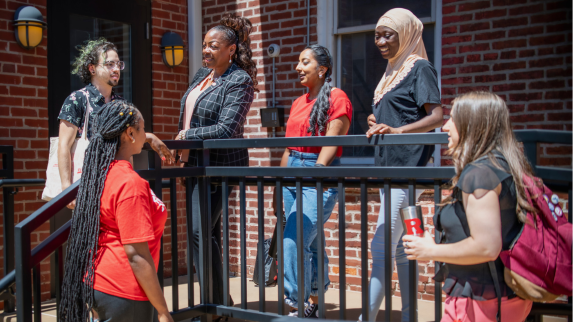
Want more stories like this? Spotlights and Stories highlights alumni, faculty, staff, and student experiences through stories, video, and voice. Learn more
Explore Graduate School Programs
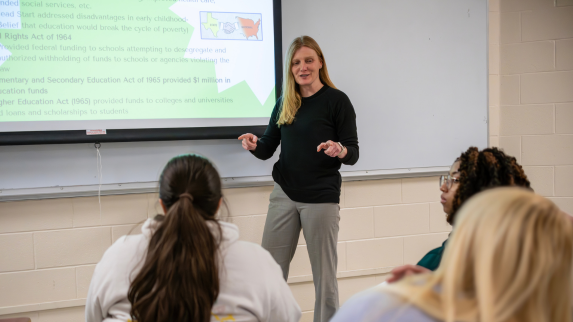
Rutgers Graduate School-Camden offers 20+ graduate certificates, master’s, and doctoral programs across various disciplines, including biology, data science, creative writing, and psychology. We take pride in our academic diversity. Learn more
Former Students, Get Involved

Stay connected with Rutgers-Camden! Engage with former students, attend events, and support current students. Your involvement strengthens our community and helps shape future success. Learn more