

Prediction of Binding Affinity for Protein–Peptide Systems Using SE(3)-Equivariant Neural Networks
Author: Aditya Birla | Computational and Integrative Biology
Abstract:
Accurate prediction of binding free energy (ΔG) for protein–peptide complexes remains a challenging problem due to the high dimensionality and geometric complexity of molecular interactions. We propose an energy-based framework leveraging SE(3) equivariance to ensure rotational and translational consistency in learned representations. Protein (receptor) and peptide (ligand) structures are encoded as multi-channel 3D voxel grids representing atomic density distributions. These inputs are processed through SE(3)-equivariant convolutional layers that generate both scalar and vector-valued feature fields, enabling the model to capture invariant and directional interaction patterns. Binding affinity is computed via learned correlation functions between receptor and ligand features, followed by spatial aggregation to produce a global energy estimate. The model is trained using supervised regression on experimentally determined ΔG values from the PDBbind dataset. Our approach improves data efficiency and generalization by incorporating physical symmetries directly into the architecture, providing a scalable framework for modeling protein–peptide and potentially protein–protein interactions.
Graduate Poster Exhibition at SPARK!
The Graduate Poster Exhibition celebrates the research and creative work of the graduate community, showcasing everything from prose and code to original research and artistic expression. As part of SPARK! (Showcase of Projects, Art, Research, and Knowledge), a reimagining of Research Week, the exhibition highlights the depth, range, and impact of graduate scholarship and invites the campus community to engage with ideas taking shape across disciplines.
Bridging Disciplines: The Center for Computational and Integrative Biology
The Center for Computational and Integrative Biology (CCIB) at Rutgers–Camden combines experimental and computational methods to address complex biological questions. CCIB offers graduate programs leading to M.S. and Ph.D. degrees, emphasizing a holistic understanding of biological systems from molecular to population levels. The curriculum equips students like Basirat with the skills to conduct innovative research at the intersection of biology, chemistry, computer science, mathematics, and physics.
Spotlights & Stories
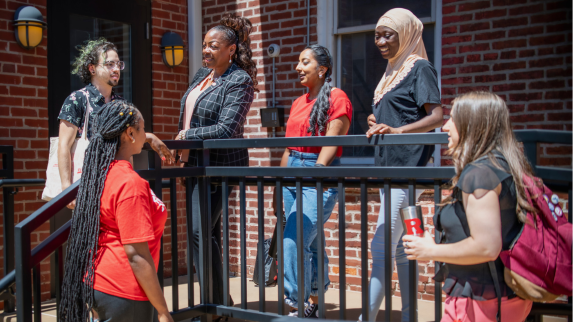
Want more stories like this? Spotlights and Stories highlights alumni, faculty, staff, and student experiences through stories, video, and voice. Learn more
Explore Graduate School Programs
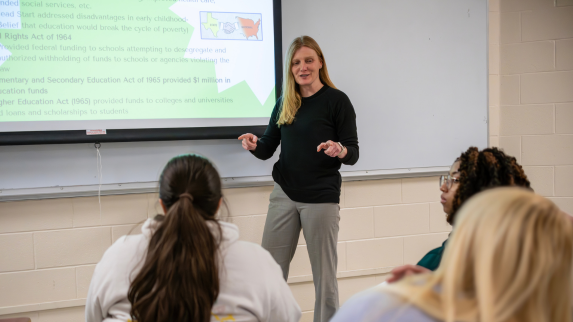
Rutgers Graduate School-Camden offers 20+ graduate certificates, master’s, and doctoral programs across various disciplines, including biology, data science, creative writing, and psychology. We take pride in our academic diversity. Learn more
Former Students, Get Involved

Stay connected with Rutgers-Camden! Engage with former students, attend events, and support current students. Your involvement strengthens our community and helps shape future success. Learn more